
stovetop mac and cheese delivers tender pasta, a rich cheese sauce, and plenty of cozy flavor in about 25 minutes.
The best part? You don’t need boxed macaroni or a long list of ingredients. With butter, milk, cheddar, and a few pantry staples, you can make homemade mac and cheese that tastes creamy, cheesy, and satisfying.
I love recipes like this because they work for busy weeknights, quick lunches, and those evenings when you want comfort food without a complicated cooking project. Why settle for powdered cheese when you can make a smooth sauce from scratch?
Stovetop Mac and Cheese Recipe at a Glance
- Prep time: 10 minutes
- Cook time: 15 minutes
- Total time: 25 minutes
- Servings: 4
- Difficulty: Easy
- Cooking method: Stovetop
- Main ingredients: Pasta, cheddar cheese, milk, and butter
This easy stovetop mac and cheese works as a main dish or a side for grilled chicken, roasted vegetables, or a fresh salad.
Why You’ll Love This Easy Stovetop Recipe
Homemade stovetop mac and cheese offers a few advantages over baked versions. You can prepare it quickly, adjust the sauce while it cooks, and serve it immediately without waiting for an oven to finish the job.
Here are a few reasons to keep this recipe handy:
- Quick preparation: You can get dinner on the table in about 25 minutes.
- Simple ingredients: Most items come from an ordinary kitchen pantry or refrigerator.
- Creamy texture: Milk, butter, and freshly shredded cheddar create a rich sauce.
- Easy customization: Add vegetables, cooked chicken, or spices to suit your taste.
- Less cleanup: You only need a saucepan for the pasta, a pot for the sauce, and a few basic utensils.
IMO, the biggest advantage is control. You can adjust the thickness, cheese flavor, and seasoning as you cook instead of hoping a packaged mix tastes right.
Ingredients for Creamy Stovetop Mac and Cheese
This recipe makes four servings. Measure everything before you start so you can prepare the sauce smoothly while the pasta cooks.
Ingredient List
- 8 ounces (225 g) elbow macaroni or small pasta shells
- 2 tablespoons (28 g) butter
- 2 tablespoons (16 g) all-purpose flour
- 2 cups (480 ml) milk
- 2 cups (200–220 g) freshly shredded sharp cheddar cheese
- 1/2 teaspoon salt, or to taste
- 1/4 teaspoon black pepper
- 1/2 teaspoon garlic powder, optional
- 1/4 teaspoon mustard powder, optional
- 1/4 cup (60 ml) reserved pasta water, as needed
Choosing the Best Ingredients
Pasta: Elbow macaroni is the classic choice because its shape catches the cheese sauce. Small shells, rotini, or cavatappi also work well.
Cheddar cheese: Sharp cheddar gives the sauce a stronger flavor. You can combine cheddar with Monterey Jack for a milder, extra-creamy result.
Milk: Whole milk creates a richer sauce, while 2% milk works well for a slightly lighter option.
Butter and flour: These ingredients form a simple roux that thickens the sauce. Cook them together briefly to remove the raw flour taste.
Seasonings: Black pepper and garlic powder add flavor without overpowering the cheese. Mustard powder adds a subtle tang that complements cheddar.
How to Make Stovetop Mac and Cheese
Follow these steps for a creamy homemade stovetop recipe. The key is to cook the pasta properly and add the cheese over gentle heat.
Step 1: Boil the Pasta
Fill a large saucepan with water and bring it to a boil over high heat. Add the salt according to your preference, then stir in the macaroni.
Cook the pasta according to the package directions until it reaches an al dente texture. This means the pasta feels tender but still has a slight bite in the center.
Stir occasionally to prevent the pasta from sticking together. Start checking it a minute before the package’s suggested cooking time ends because you don’t want mushy macaroni in your finished dish.
Before draining the pasta, reserve about 1/4 cup of the cooking water. The starchy water can help loosen the cheese sauce later without making it watery.
Drain the pasta and set it aside. You don’t need to rinse it because the starch on the surface can help the sauce cling to the noodles.
Step 2: Melt the Butter
Place a medium saucepan over medium-low heat. Add the butter and let it melt gently.
Swirl the pan or stir with a wooden spoon so the butter melts evenly. Avoid letting it brown because this recipe needs a mild buttery flavor rather than the nutty taste of browned butter.
Once the butter melts completely, move straight to the next step. You don’t need to let it bubble aggressively or cook for several minutes.
Step 3: Make the Roux
Sprinkle the flour over the melted butter. Whisk continuously for about one minute until the mixture forms a smooth paste.
The butter coats the flour and helps it disperse through the milk later. This mixture, called a roux, thickens the sauce and gives the mac and cheese its creamy consistency.
Keep the heat moderate and continue whisking. If the mixture starts turning dark brown, lower the heat because a light roux suits this cheese sauce best.
Don’t worry if the mixture looks thick at this stage. Milk will transform it into a smooth sauce in the next step.
Step 4: Add the Milk Gradually
Pour in a small splash of milk while whisking. Once the mixture looks smooth, slowly add the remaining milk.
Adding milk gradually helps prevent lumps from forming. Keep whisking as the sauce begins to heat and thicken.
Cook the mixture over medium-low heat for approximately 3–5 minutes. Stir frequently, paying attention to the bottom and corners of the saucepan.
The sauce should lightly coat the back of a spoon. If it looks extremely thick before you add the cheese, whisk in a little more milk.
Step 5: Season the Sauce
Add the black pepper, garlic powder, and mustard powder if you’re using them. Stir well so the seasonings distribute evenly through the sauce.
Taste a small spoonful before adding extra salt. Cheddar cheese already contains salt, so you may not need much additional seasoning.
Want a little heat? Add a pinch of cayenne pepper or paprika. Keep the seasoning balanced so the cheddar remains the main flavor.
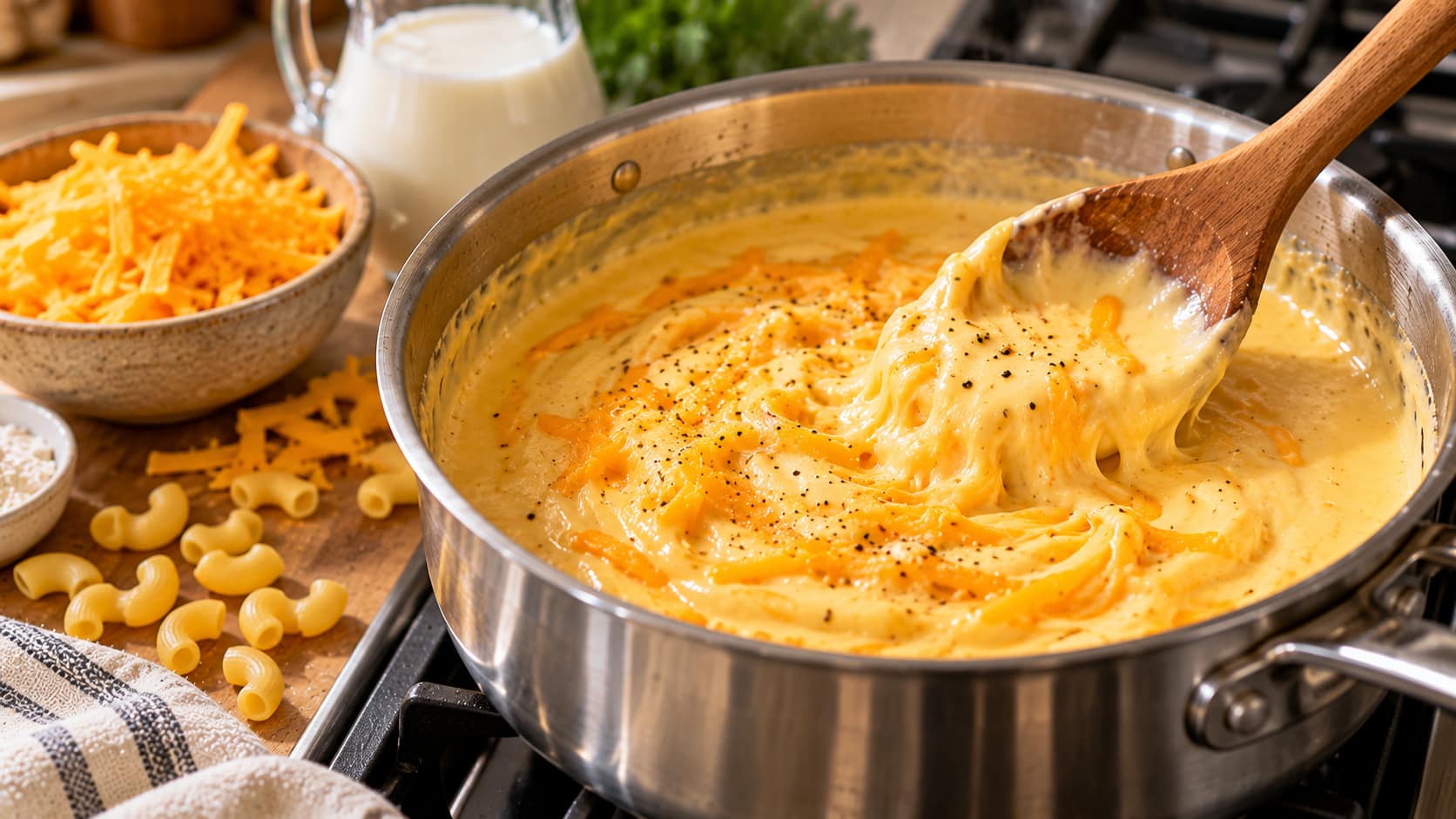
Step 6: Add the Cheddar Cheese
Reduce the heat to low. Add the shredded cheddar in small handfuls, stirring after each addition until the cheese melts.
This gradual approach helps the cheese blend into the sauce more evenly. Avoid boiling the sauce after adding the cheese because excessive heat can make the sauce grainy or oily.
For the smoothest result, shred the cheese yourself instead of relying on pre-shredded cheese. Packaged shredded cheese often contains anti-caking ingredients that can affect how smoothly it melts.
Once the cheese melts, the sauce should look glossy and creamy. If it becomes too thick, add a small splash of milk or reserved pasta water and stir again.
Step 7: Combine the Pasta and Cheese Sauce
Add the drained macaroni to the cheese sauce. Stir gently until the sauce coats every piece of pasta.
Take your time with this step so the noodles distribute evenly. Scrape the bottom of the pan gently to bring up any sauce that has settled.
If the mac and cheese feels too thick, add reserved pasta water one tablespoon at a time. If the sauce seems too loose, let it sit over very low heat for a short time while stirring.
Avoid cooking the pasta in the sauce for too long. The noodles will continue absorbing liquid, and you want them tender rather than soft and swollen.
Step 8: Taste and Serve
Taste the finished mac and cheese and adjust the seasoning if necessary. Add a little more black pepper or a small pinch of salt if the flavor needs a boost.
Remove the saucepan from the heat once the sauce reaches your preferred consistency. Serve immediately while the cheese sauce remains smooth and creamy.
For a simple finishing touch, sprinkle a little extra cheddar or chopped parsley over each portion. Serve the mac and cheese alongside a fresh salad, steamed broccoli, or grilled chicken.
Tips for the Creamiest Stovetop Mac and Cheese
A few small details can make a big difference in your homemade cheese sauce.
- Shred your own cheese: Freshly shredded cheddar usually melts more smoothly.
- Keep the heat low after adding cheese: Gentle heat helps prevent separation.
- Use warm milk if possible: It can help the sauce heat more evenly.
- Reserve pasta water: A little starchy water can loosen a thick sauce.
- Don’t overcook the pasta: Al dente noodles hold their shape better.
- Serve it promptly: Cheese sauce naturally thickens as it cools.
The most common mistake is turning the heat up because the sauce seems slow to thicken. Resist that urge. Moderate heat and steady stirring usually produce a better result.
Easy Variations to Try
Add Broccoli
Stir in about 1 cup of small broccoli florets. Boil them with the pasta during the final 2–3 minutes of cooking, then drain everything together.
This variation adds color, texture, and vegetables without requiring another saucepan.
Make It Spicy
Add a pinch of cayenne pepper, smoked paprika, or red pepper flakes to the sauce. Start small and adjust after tasting.
Add Chicken
Stir in 1 cup of cooked, shredded chicken for a more substantial meal. Add it when you combine the pasta and cheese sauce, then heat everything through.
Try Different Cheeses
Combine cheddar with Monterey Jack, Gruyère, or a little Parmesan. Each cheese brings a different flavor, so keep cheddar as the main ingredient if you want that classic mac and cheese taste.
Make It Extra Creamy
Replace 1/4 cup of the milk with evaporated milk or add 2 tablespoons of cream cheese. Stir until smooth and adjust the seasoning before serving.
How to Store and Reheat Leftovers
Let the mac and cheese cool slightly, then transfer it to an airtight container. Refrigerate it within two hours of cooking and eat it within 3–4 days.
To reheat, place a portion in a saucepan over low heat. Add a splash of milk and stir gently until the sauce becomes creamy again.
You can also use a microwave. Place the mac and cheese in a microwave-safe bowl, add a little milk, cover loosely, and heat in short intervals. Stir between intervals to distribute the heat.
Freezing can change the sauce’s texture, so refrigeration works better if you plan to eat the leftovers within a few days.

Easy Creamy Stovetop Mac and Cheese Recipe
4
servings10
minutes15
minutes300
kcalThis creamy stovetop mac and cheese combines tender elbow macaroni with a smooth cheddar cheese sauce. Prepare a simple butter-and-flour roux, whisk in milk, add seasonings and shredded cheese, then toss with cooked pasta. Ready in about 25 minutes, this easy comfort-food recipe makes four servings for lunch, dinner, or a satisfying side.
Ingredients
8 ounces (225 g) elbow macaroni
2 tablespoons butter
2 tablespoons all-purpose flour
2 cups milk
2 cups shredded sharp cheddar cheese
1/2 teaspoon salt, or to taste
1/4 teaspoon black pepper
1/2 teaspoon garlic powder, optional
1/4 teaspoon mustard powder, optional
1/4 cup reserved pasta water, as needed
Directions
- Boil the macaroni until al dente, then reserve some pasta water and drain.
- Melt the butter in a saucepan over medium-low heat.
- Whisk in the flour and cook for about one minute.
- Gradually whisk in the milk until smooth.
- Simmer for 3–5 minutes until the sauce thickens.
- Add the seasonings and reduce the heat to low.
- Stir in the cheddar a handful at a time until melted.
- Add the cooked pasta and toss until evenly coated.
- Adjust the consistency with milk or pasta water.
- Taste, season if needed, and serve immediately.
Frequently Asked Questions
1. Can I make stovetop mac and cheese without flour?
Yes. You can use a different thickening method or prepare a cheese sauce using evaporated milk and suitable melting cheeses. The texture may differ from the traditional roux-based version.
2. Why is my cheese sauce grainy?
High heat can cause cheese proteins and fats to separate. Reduce the heat before adding cheese and stir gradually until it melts.
3. Can I use pre-shredded cheese?
Yes, but freshly shredded cheese often melts more smoothly. Pre-shredded cheese can contain anti-caking ingredients that sometimes affect the sauce’s texture.
4. How do I make the sauce thinner?
Add milk or reserved pasta water one tablespoon at a time while stirring. Stop when the sauce reaches your preferred consistency.
5. Can I prepare mac and cheese ahead of time?
You can cook it ahead, but the sauce will thicken as it cools. Refrigerate it in an airtight container and add a little milk when reheating.
6. What pasta works best for this recipe?
Elbow macaroni is the classic choice. Small shells, rotini, and cavatappi also work because their shapes hold the cheese sauce well.
7. How can I make this recipe more nutritious?
Add broccoli, peas, or spinach, or serve it with a protein source such as chicken or beans. You can also use whole-wheat pasta for additional fiber.
Final Thoughts
This creamy stovetop mac and cheese proves that you don’t need an oven or a complicated recipe to make a comforting meal. With pasta, milk, butter, flour, and cheddar, you can create a creamy homemade dish in about 25 minutes.
Remember the essentials: cook the pasta until al dente, whisk the sauce until smooth, and add the cheese over low heat. Serve it while it’s hot, and don’t be surprised if everyone asks for seconds.


