How to Prevent Potato Sprouts and Reduce Waste
Have you ever reached into your pantry to grab potatoes for dinner, only to find little sprouts growing from their eyes? It’s frustrating when you planned to make crispy fries, creamy mashed potatoes, or a comforting homemade curry, but your potatoes look like they’ve started growing their own garden.
The good news is that proper storage can help keep potatoes fresh for longer and slow unwanted sprouting. You don’t need expensive equipment or complicated tricks. A few simple changes to where and how you store them can make a real difference.
In this guide, you’ll learn how to keep potatoes from sprouting, where to store them, which common kitchen hacks to avoid, and how to tell whether sprouted potatoes are still safe to eat.
Why Do Potatoes Sprout?
Potatoes are living plant parts called tubers. Under suitable conditions, the small buds known as eyes can begin growing into shoots.
Warm temperatures, exposure to light, and extended storage can encourage this process. Potatoes may also sprout faster when they’re kept in unsuitable conditions or stored for a long time.
The goal is to create a storage environment that slows sprouting while keeping the potatoes dry, well-ventilated, and protected from light.
The best starting point is a cool, dark, dry place with good airflow.
8 Easy Ways to Keep Potatoes from Sprouting
1. Store Potatoes in a Cool, Dark Place

One of the most effective ways to slow sprouting is to store potatoes away from heat and light.
A cool pantry, cupboard, or suitable storage room can work well, provided the area stays dry and has adequate ventilation. Avoid spots near ovens, radiators, sunny windows, or other sources of heat.
How to do it:
- Choose a cool, dark storage area.
- Keep potatoes away from direct sunlight and artificial light where possible.
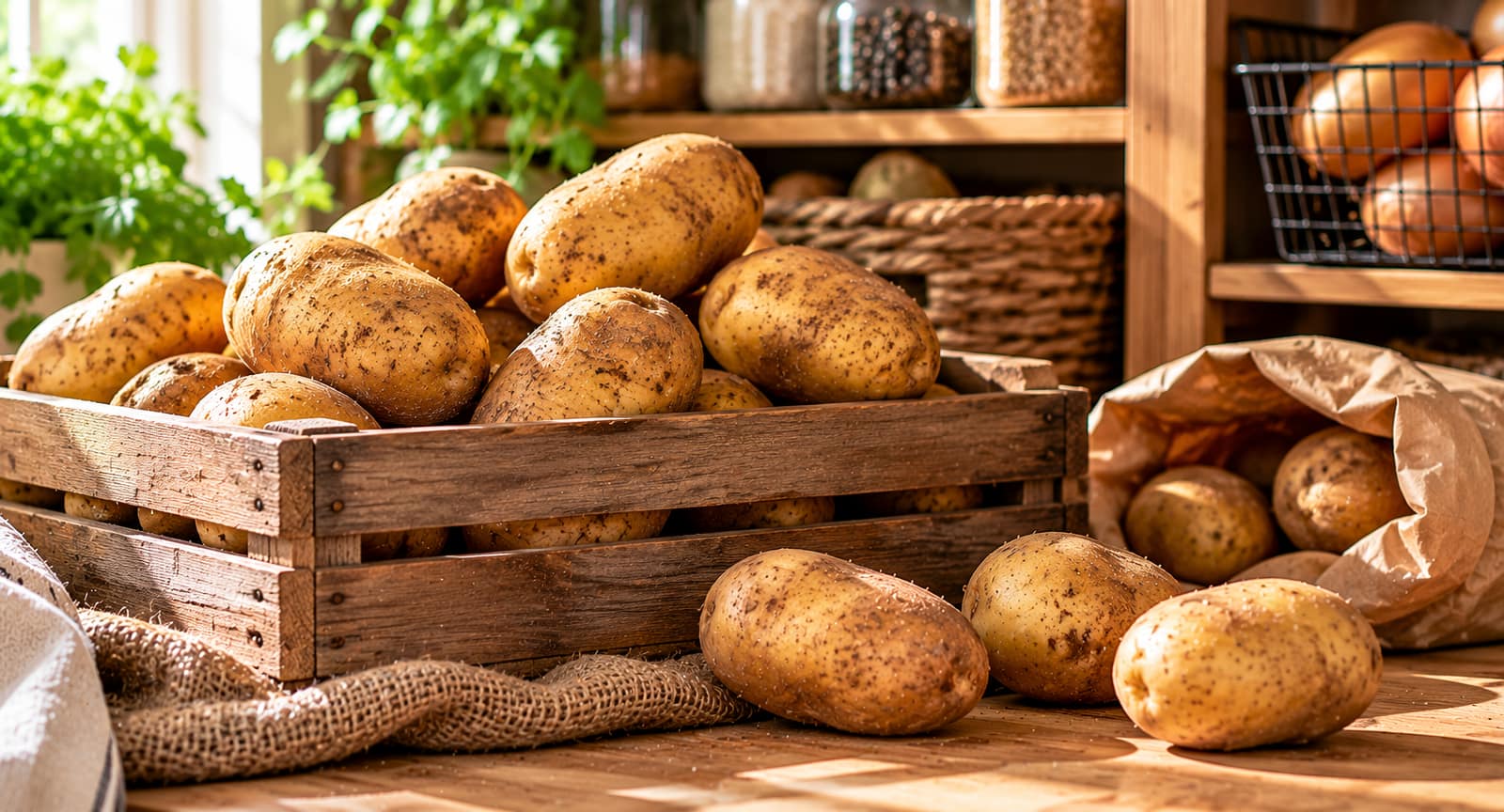
- Store them in a breathable basket, paper bag, or ventilated crate.
- Check the storage area periodically for dampness or excessive warmth.
- Inspect the potatoes regularly and remove any that begin to spoil.
A temperature around 45–50°F (7–10°C) is often suitable for longer-term storage when conditions allow, although the best temperature depends on the potato variety and intended use.
Best for: Everyday storage when you want to slow sprouting without special equipment.
2. Keep Potatoes Away From Sunlight

Light can encourage potatoes to turn green and may contribute to the development of glycoalkaloids, natural compounds that can be harmful in excessive amounts. Sunlight and bright kitchen lighting are therefore best avoided during storage.
How to do it:
- Store potatoes in an opaque paper bag, cardboard box, or covered ventilated crate.
- Keep the container away from sunny windows.
- Avoid displaying potatoes on an open countertop for long periods.
- Check occasionally for green patches and developing sprouts.
A breathable container helps protect potatoes from light without trapping too much moisture.
Best for: Potatoes stored for more than a few days.
3. Use a Breathable Storage Container

Potatoes need airflow during storage. Sealing them inside an airtight plastic container can trap moisture, encouraging mold, rot, and unpleasant odors.
A basket, mesh sack, paper bag, or ventilated crate is generally a better choice.
How to do it:
- Choose a clean, dry container with ventilation openings.
- Add the potatoes without packing them too tightly.
- Keep the container in a cool, dark location.
- Avoid stacking heavy items on top of the potatoes.
- Inspect the bottom layer regularly for moisture or damaged potatoes.
If you use a paper bag, leave enough space for air circulation and avoid placing it somewhere damp.
Best for: Anyone who buys potatoes in larger quantities.
4. Keep Potatoes Away From Onions

Potatoes and onions are both pantry staples, so storing them together might seem convenient. However, they generally keep better when stored separately.
Both produce moisture and gases during storage, and onions can release odors that may affect nearby foods. Separating them also makes it easier to monitor the condition of each vegetable.
Try this simple setup:
- Store potatoes in a dark, ventilated container.
- Keep onions in their own breathable basket.
- Leave space between the two containers.
- Check both vegetables regularly for soft spots, dampness, or spoilage.
Keeping them apart won’t guarantee that potatoes never sprout, but it helps create a more organized storage area.
Best for: Kitchens and pantries where potatoes and onions are purchased together.
5. Don’t Wash Potatoes Before Storing Them

Washing potatoes before long-term storage can leave moisture on their skins. That extra moisture may increase the risk of decay, especially if the potatoes are stored in a poorly ventilated area.
It’s usually better to keep potatoes dry and wash them just before cooking.
How to do it:
- Remove loose dirt gently with a dry brush or cloth.
- Don’t scrub or soak potatoes before storing them.
- Keep damp potatoes separate until their surfaces are completely dry.
- Wash them thoroughly under running water before preparing them for a meal.
If you buy commercially washed potatoes, follow the package’s storage instructions and keep them dry.
Best for: Extending the storage life of potatoes purchased in bulk.
6. Buy the Right Quantity of Potatoes

Sometimes the simplest way to prevent sprouting is to avoid buying more potatoes than you can use before they deteriorate.
Potatoes may stay in good condition for quite some time when stored properly, but their shelf life depends on their variety, maturity, condition at purchase, and storage environment.
Follow these shopping tips:
- Buy quantities that suit your household’s cooking habits.
- Choose firm potatoes without extensive bruises or damaged skin.
- Avoid bags containing many soft, wet, or heavily sprouted potatoes.
- Use older potatoes before opening a newer bag.
- Check your supplies before buying more.
This approach reduces waste and helps you catch early signs of sprouting before the entire batch is affected.
Best for: Small households and anyone who often forgets about produce in the pantry.
7. Check Potatoes Regularly and Remove Damaged Ones

Even ideal storage conditions can’t stop sprouting forever. Regular inspection helps you spot problems early and prevent one spoiled potato from affecting the rest.
How to do it:
- Inspect your potatoes about once a week.
- Remove any potatoes that are leaking, moldy, or rotting.
- Separate soft or heavily sprouted potatoes from firm ones.
- Check the bottom of the storage container for dampness.
- Clean and dry the container before refilling it if necessary.
A potato that has developed a tiny sprout isn’t automatically spoiled, but its firmness, color, and overall condition matter.
Best for: Keeping larger batches of potatoes in good condition for as long as possible.
8. Avoid Storing Potatoes in a Warm Kitchen

Kitchens can become warm from cooking appliances, sunlight, and poor ventilation. These conditions may encourage potatoes to sprout sooner.
If your kitchen runs hot, look for a cooler cupboard, pantry, or storage room instead.
Try these tips:
- Keep potatoes away from the oven and stove.
- Avoid storing them on top of the refrigerator.
- Choose a shaded area with stable temperatures.
- Don’t leave potato bags beside a sunny window.
- Keep the storage space dry and ventilated.
If you live in a hot climate and don’t have a cool pantry, buy smaller quantities and inspect them more frequently.
Best for: Warm kitchens where potatoes tend to sprout quickly.
Should You Store Potatoes in the Refrigerator?
For most everyday home cooking, a cool, dark pantry is a good first choice. Refrigeration isn’t always ideal because cold temperatures can cause some potatoes to accumulate more sugars, which may lead to darker browning when fried or roasted at high temperatures.
However, storage advice can vary with potato variety, cooking method, and how warm your home is. If your only alternative is a very warm kitchen, refrigeration may be worth considering, especially when following local food-storage guidance. Keep potatoes away from moisture and use them appropriately.
For the best everyday results: Choose a cool, dark, well-ventilated location and avoid temperature extremes.
How to Tell If Sprouted Potatoes Are Still Safe to Eat

Finding sprouts doesn’t automatically mean every potato must be thrown away. What matters is the potato’s overall condition, including its firmness, color, and the extent of sprouting.
- Firm potato with a tiny sprout: You can generally remove the sprout and its surrounding eye generously, then peel and prepare the potato.
- Green patches: Remove small green areas generously if the potato is otherwise firm, but discard potatoes that are extensively green or bitter.
- Soft, shriveled, or heavily sprouted potato: It’s safer to discard it, particularly if it has extensive sprouts or other signs of deterioration.
- Moldy, leaking, or rotten potato: Discard it rather than trying to salvage it.
Potatoes contain natural glycoalkaloids, including solanine and chaconine. These compounds can occur at elevated levels in green, damaged, or sprouting potatoes. Cooking doesn’t reliably eliminate the risk from high levels, so don’t eat potato sprouts or rely on cooking to make badly affected potatoes safe.
Common Potato Storage Mistakes to Avoid
Storing Potatoes in Direct Sunlight
Light can encourage greening and contribute to the accumulation of undesirable compounds. Use an opaque container in a dark place.
Sealing Potatoes in an Airtight Plastic Bag
Poor airflow and trapped moisture can encourage rot. Choose a breathable basket, paper sack, or ventilated container.
Washing Potatoes Before Long-Term Storage
Wet surfaces can encourage decay. Keep potatoes dry and wash them shortly before cooking.
Keeping Potatoes Beside Onions
Separate storage makes it easier to manage moisture, odors, and spoilage. Give each vegetable its own breathable container.
Ignoring the Bottom of the Bag
Potatoes at the bottom may become bruised or damp without being noticed. Inspect the entire batch regularly.
Frequently Asked Questions
How do I keep potatoes from sprouting for months?
Store sound, unwashed potatoes in a cool, dark, dry, well-ventilated place. Inspect them regularly and remove damaged potatoes. No method can guarantee that potatoes won’t eventually sprout, especially during long storage.
Does putting an apple with potatoes stop them from sprouting?
Some people recommend storing an apple with potatoes, but results are inconsistent. Apples release ethylene, which can affect the behavior of stored potatoes in complex ways. It’s better to rely on proper temperature, darkness, ventilation, and regular inspection.
Should potatoes be stored in plastic bags?
Avoid tightly sealed plastic bags for long-term storage because they can trap moisture. If potatoes come in a plastic bag, transfer them to a breathable container or leave the packaging open if it allows adequate airflow.
Can I eat potatoes that have small sprouts?
A firm potato with a small sprout may still be usable if you remove the sprout and its eye generously and discard any green or damaged areas. Throw away potatoes that are extensively green, soft, shriveled, or heavily sprouted.
Does keeping potatoes in the dark prevent sprouting completely?
No. Darkness helps prevent greening, but potatoes can still sprout over time. Cool temperatures and proper ventilation are also important.
How often should I check stored potatoes?
A weekly check is a useful habit. Remove damaged potatoes promptly and make sure the storage area remains cool, dry, and dark.
Can I store potatoes and onions together?
It’s better to store them separately in breathable containers. This makes it easier to monitor each vegetable and maintain suitable storage conditions.
Final Thoughts
Learning how to keep potatoes from sprouting starts with a few simple habits. Store them in a cool, dark, dry place, use a breathable container, keep them away from onions and heat, and inspect your supply regularly.
Remember that sprouting is a natural process, so you can’t prevent it forever. But with proper storage and sensible shopping habits, you can slow it down and reduce food waste.
Your best kitchen hack is simple: keep potatoes cool, dark, dry, and well ventilated.